
Data center power is pulling turbine manufacturing back in-house
Key takeaways
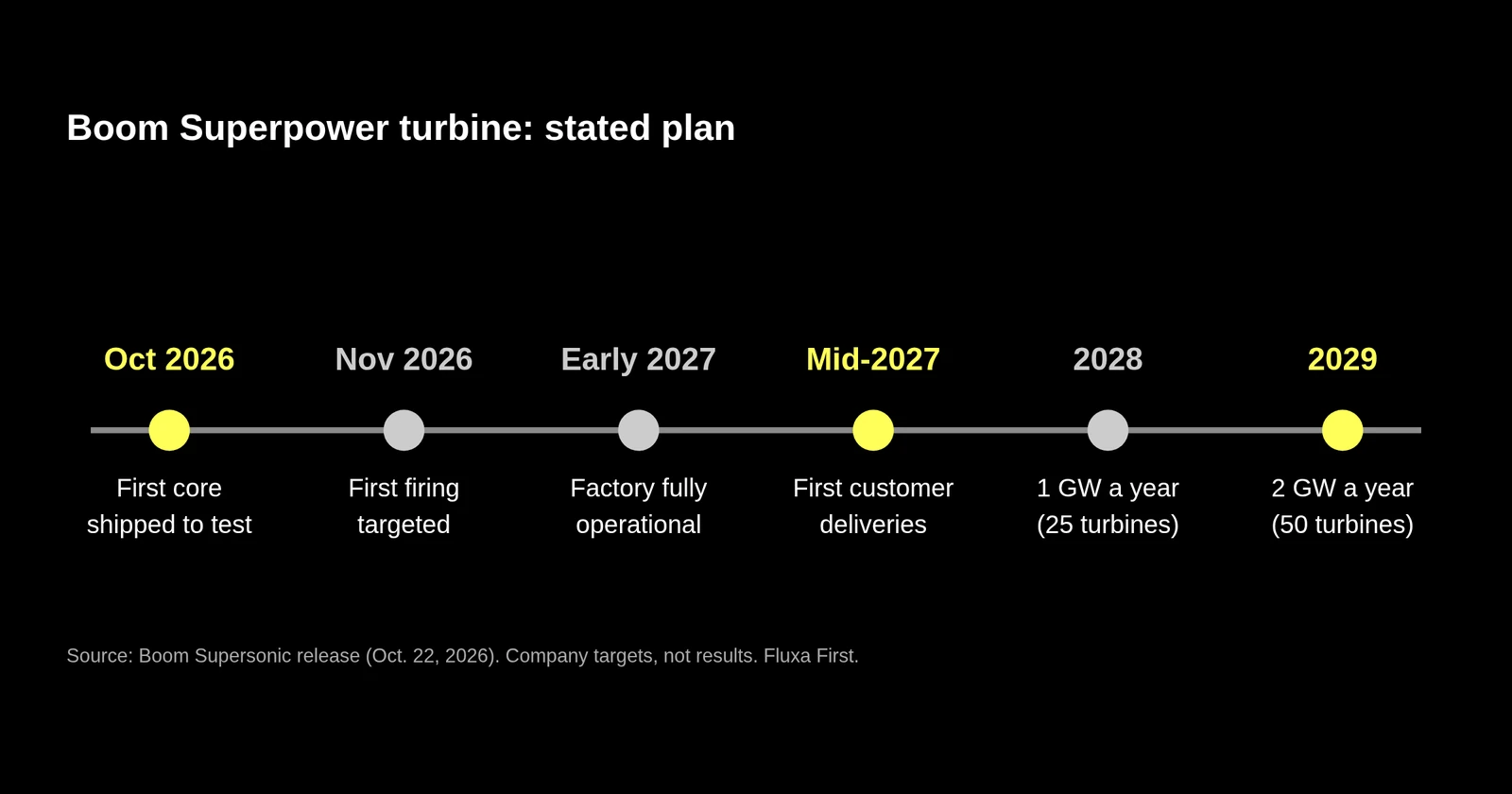
- On October 22, 2026, Boom Supersonic began shipping its first turbine core to its test site and unveiled a $150 million factory in Colorado that it says will make 2 GW of 42 MW gas turbines a year by 2029.
- Boom plans to make about 85% of each turbine by mass in-house and is developing a tool-free digital foundry for single-crystal blades, with first components expected in 2027.
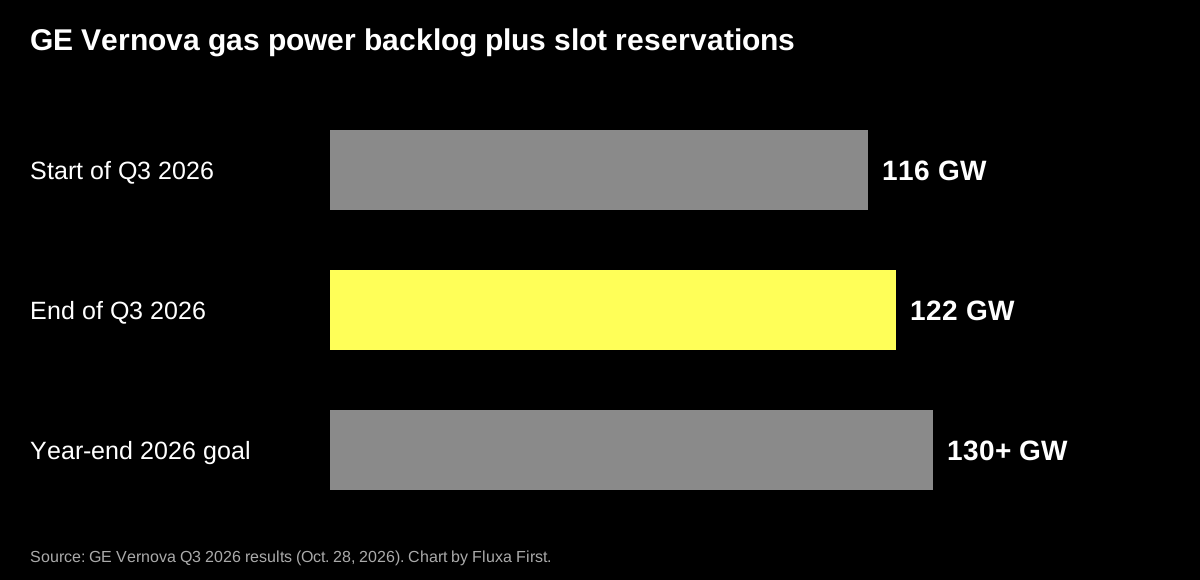
- GE Vernova reported 122 GW of gas power backlog and slot reservations at the end of the third quarter of 2026, up from 116 GW, and expects at least 130 GW by year end.
- We see power equipment for data centers as a once-in-a-generation pull on American manufacturing, and vertical integration as a real advantage when suppliers are the bottleneck.
The rush to power data centers is creating demand for heavy equipment faster than suppliers can build it, and it is changing how new manufacturers organize. This week Boom Supersonic, best known for its supersonic airliner program, unveiled a turbine factory aimed at producing 2 GW of natural gas turbines a year by 2029, and said it will make most of each machine itself. The lesson for founders goes beyond turbines: when suppliers are the bottleneck, owning the hard steps can be the strategy.
What did Boom announce?
On October 22, Boom said it had completed its first prototype turbine core, which will power both its Superpower 42 MW gas turbine for data centers and the engine for its Overture airliner. The core, which carries more than 1,000 sensors, was shipping to the company’s test site in Watkins, Colorado, with first firing expected before Thanksgiving.
Boom also unveiled its Superpower factory in Centennial, Colorado: nearly 200,000 square feet across two buildings, a $150 million investment, up to 500 jobs and more than 75 large CNC and coordinate-measuring machines planned. The company says the factory is already making parts and should be fully operational in early 2027. Its targets are first customer deliveries in mid-2027, 1 GW a year (25 turbines) by 2028 and 2 GW a year (50 turbines) by 2029.
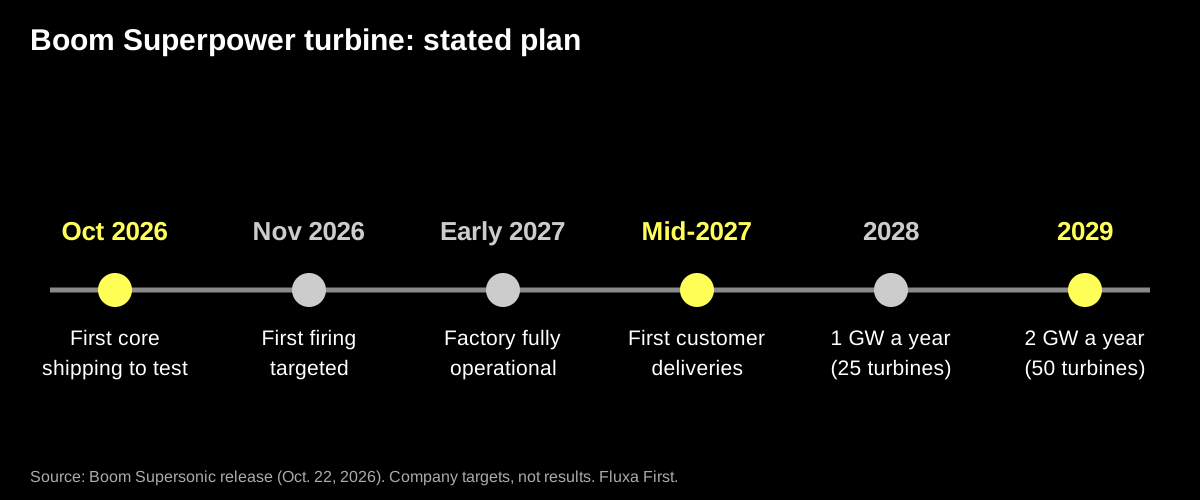
These are company targets. Boom has not yet fired the core, and turbine programs are hard. We are writing about the plan because of what it shows about manufacturing strategy, not because the outcome is settled.
Why does vertical integration matter here?
Boom says the campus will make blisks, blades, vanes, shafts and cases from raw materials, components representing about 85% of the final product by mass. It is also developing an all-digital foundry to cast single-crystal turbine blades and vanes from custom superalloys without tooling, with first single-crystal components expected in 2027. The company argues that keeping design, manufacturing, assembly and test together lets a small team turn design changes into parts in hours or days, rather than the weeks or months external suppliers can take.
That argument matters because the turbine supply chain is tight. GE Vernova reported on October 28 that its gas power equipment backlog and slot reservations grew from 116 GW to 122 GW in the third quarter of 2026, and it now expects at least 130 GW by year end. Buyers are reserving production years ahead.
Single-crystal casting is one of the hardest steps in that chain, much like the castings and forgings bottlenecks we wrote about earlier this month. A new entrant that depends on the same few foundries as everyone else waits in the same line.
Is this bigger than one company?
The same pull shows up across the power and cooling equipment that data centers need. On the same day, Carrier announced plans to invest more than $600 million over three years in a new advanced manufacturing and engineering center in Fort Worth, Texas, to expand commercial chiller production. The company cited record backlog driven by demand from data centers, healthcare, education and industrial markets, and said the site will create 1,500 jobs and begin operating in 2027.
Transformers, switchgear, turbines and chillers are all being pulled by the same wave. We covered the transformer side in the power transformer shortage.
What should founders and investors take from this?
Find the step everyone waits on. In a supply-constrained market, the bottleneck component is where pricing power and defensibility sit. Single-crystal blades are one example. There are many others in power electronics, magnets, precision machining and test.
Vertical integration is a tool, not a default. Bringing hard steps in-house costs capital and focus. It pays when suppliers are slow, scarce or unwilling to iterate, as in turbines today. It does not pay for commodity parts that markets already supply well.
Dual-use capacity has real value. Boom says its digital manufacturing approach could pivot to defense production with software changes. Flexible, software-driven factories that can serve energy, aerospace and defense customers are more resilient than single-purpose lines.
Discount the targets until the hardware runs. Production goals years out are plans. Founders should be explicit about which milestones are done and which are expected, and investors should price them that way.
How we see it
We back and build advanced manufacturing companies because we think the next decade of American industry will be decided by who can make hard parts at scale. The data center build-out is giving manufacturers a rare signal: customers are paying in advance for capacity. Companies that pair that demand with control of the hardest steps, and that ship hardware on schedule, will build durable businesses well beyond this cycle.
Frequently asked questions
Why are gas turbines in short supply?
Demand for electricity from data centers, industry and utilities has grown quickly, and only a few manufacturers make large gas turbines. Their order books stretch years ahead. GE Vernova, one of the largest makers, reported 122 GW of gas power equipment backlog and slot reservations at the end of September 2026, a sign that buyers are reserving production years in advance.
What is a single-crystal turbine blade?
It is a blade cast from a superalloy as a single crystal, with no grain boundaries. That makes it far more resistant to heat and stress, so turbines can run hotter and more efficiently. Casting these blades is difficult, and few foundries in the world can do it at scale, which makes them a classic supply chain bottleneck.