
A 5% 10-year Treasury changes the math for hard-tech capital
Key takeaways
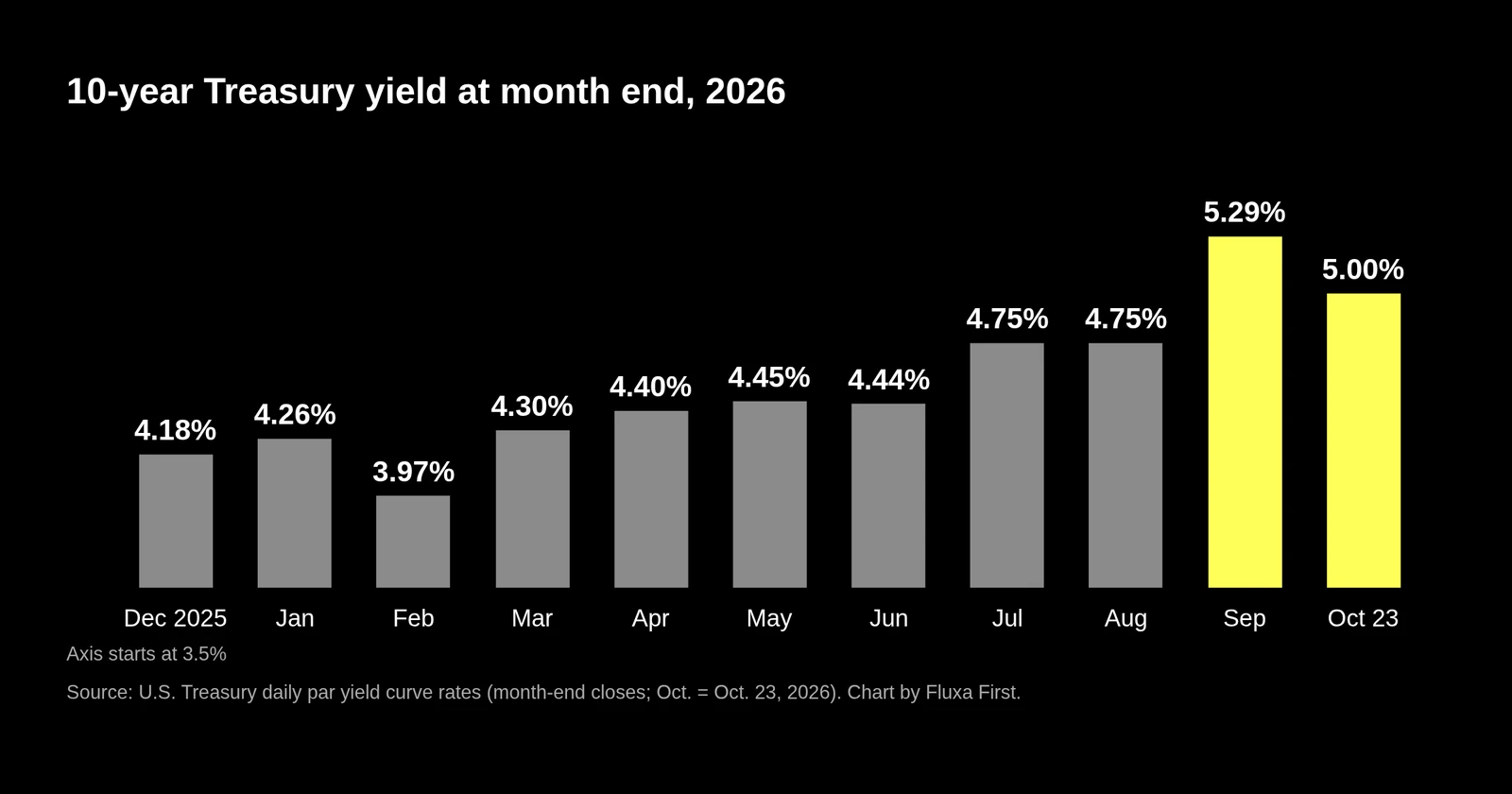
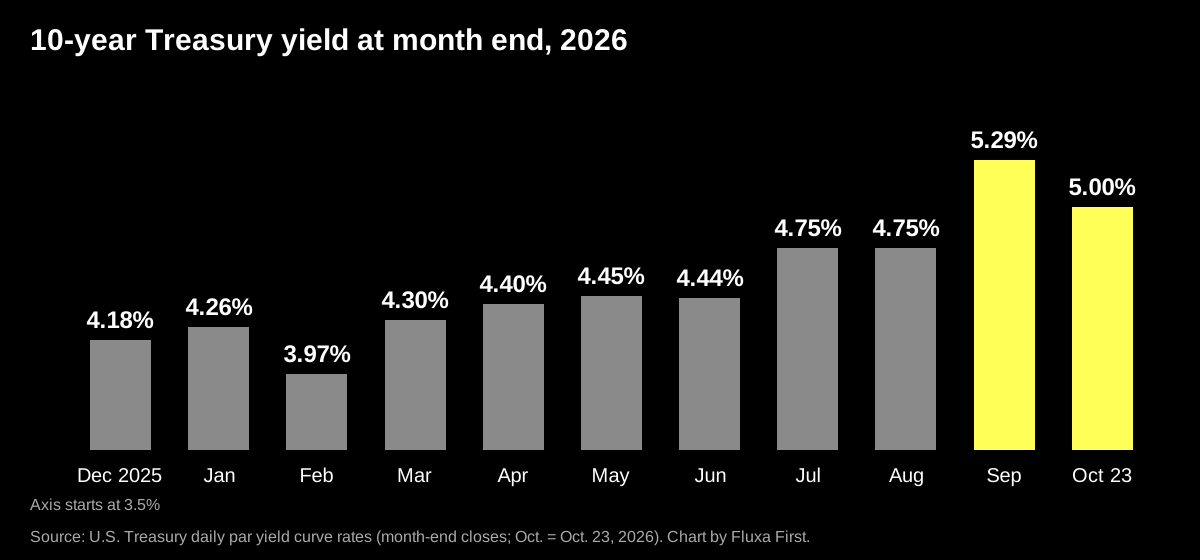
- The 10-year Treasury yield closed 2025 at 4.18%, reached 5.29% at the end of September 2026 and stood at 5.00% on October 23, according to Treasury data.
- September consumer prices rose 3.7% from a year earlier, up from 3.4% in August, with energy up 20.4%, according to the Bureau of Labor Statistics.
- Higher long-term rates raise the cost of equipment and project debt, push buyers to discount distant cash flows and can slow customer capital spending.
- We advise hard-tech founders to plan around today’s rates, bring cash milestones forward and match financing to the asset being financed.
Money got more expensive this year, and it matters more for hard tech than for most startups. The 10-year Treasury yield, the benchmark for long-term borrowing in the United States, ended 2025 at 4.18% and was at 5.00% on October 23, after touching 5.31% earlier in the month. For founders building factories, fleets and energy projects, higher rates change what kind of capital makes sense and how fast a company needs to show cash.
What happened to rates this year?
Treasury’s daily par yield curve data shows a steady climb. The 10-year sat near 4% to 4.5% through the spring, moved to 4.75% by the end of July and jumped to 5.29% at the end of September. The 2-year yield, which tracks expectations for Federal Reserve policy, rose from 3.47% to 4.69% over the same period.
Inflation is the main reason. The Bureau of Labor Statistics reported that consumer prices rose 3.7% in the year to September, up from 3.4% in August. Energy prices were up 20.4% over the year, and gasoline accounted for more than half of September’s monthly rise. Prices excluding food and energy rose 2.6%, up from 2.4%. FinancialMarkets.com reported that futures markets briefly priced roughly even odds of a rate increase at the Fed’s October 27-28 meeting before the odds eased. We do not forecast Fed decisions. The useful point for founders is that rates are higher than many plans assumed a year ago, and could stay there.
Why do higher rates hit hard tech harder?
Hard-tech companies spend heavily before revenue arrives. That makes them sensitive to the price of money in three ways.
Debt costs more. Equipment loans, project finance and venture debt are priced off benchmark rates. A factory line or a demonstration plant financed at 2026 rates carries a larger payment than the same asset financed a few years ago. Models built on cheaper money need updating.
Investors discount the future more. When a safe Treasury pays 5%, investors expect more from risky assets. A company whose profits are ten years out is worth less today at a 5% benchmark than at 4%, even with no change in its plan. That pressure shows up in valuations and in how long investors are willing to wait.
Customers slow down too. Utilities, manufacturers, shipping companies and other industrial buyers also borrow to buy equipment. Higher rates can stretch their approval cycles and shrink capital budgets, which lengthens sales cycles for the startups selling to them.
What should founders do now?
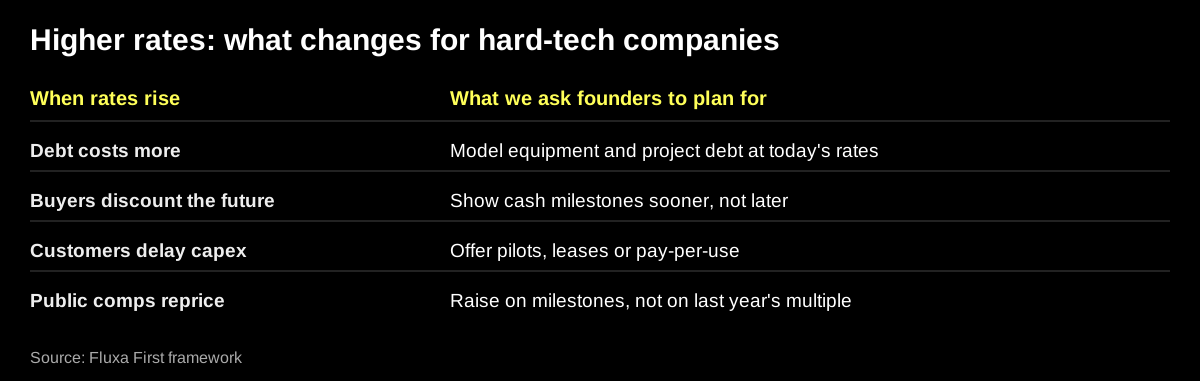
- Model today’s rates, not hoped-for ones. Build the financial plan on current borrowing costs. If the plan only works when rates fall, it is a bet on the Fed, not a business plan.
- Bring cash milestones forward. Revenue, paid pilots and signed orders are worth more when the future is discounted harder. Look for an earlier product or service that earns money while the main platform matures. Our post on phasing capital and the product roadmap lays out how.
- Match the instrument to the asset. Finance equipment with equipment debt, inventory with working capital lines and contracted revenue with revenue-backed structures. Save equity for the risks only equity should carry, such as technology and market risk. We covered the full stack in how we think about financing hard tech.
- Help customers buy. When buyers’ capital budgets tighten, leasing, pay-per-use and service models can turn a hard capital decision into an easier operating one.
- Raise on milestones. Investors are pricing rounds against today’s rates and today’s public comparables. A round tied to a clear technical or commercial milestone is easier to price than one tied to last year’s multiples.
How we see it
Durable companies do not depend on cheap money. The hard-tech businesses we want to build and back are the ones that can earn revenue early, finance assets sensibly and keep going whether rates rise or fall. Higher rates reward that discipline and punish plans that assumed endless low-cost capital.
There is also an opportunity here. When capital is scarcer, fewer competitors get funded, and companies that reach revenue have more pricing power with both customers and investors. Founders who plan for today’s cost of money will have more options when conditions change.
This article is general information, not investment, legal or tax advice.
Frequently asked questions
Why do interest rates matter to venture-backed startups?
Rates set the price of money across the economy. When long-term yields rise, debt costs more, investors demand more return from risky assets, and future cash flows are worth less today. Companies whose profits are far in the future feel this most, which is why higher rates often pressure valuations of early-stage and capital-intensive startups.
Should hard-tech startups avoid debt when rates are high?
Not necessarily. Debt secured by equipment, inventory or contracted revenue can still be cheaper than selling equity. The key is to borrow against assets and cash flows that can carry the payments at current rates, rather than assuming rates will fall before the loan comes due.