
Aviation’s real bottleneck is the engine shop
Key takeaways
- Airlines describe engine shop turnaround times of 180 to 200 days or longer, and an airline parts pool suspended its engine pooling plan because spare engines are too scarce.
- GE Aerospace reported a 49% jump in third-quarter orders, internal shop visit revenue up 12% and a commercial services backlog above $170 billion.
- GE is also buying a castings maker to expand capacity, a sign that upstream parts remain a constraint.
- Maintenance, repair, inspection and castings capacity are durable, recurring businesses where new companies can help.
Aircraft orders make headlines, but the constraint in aviation right now is a quieter one: getting engines through the shop and back on the wing. Industry news in late October made that hard to miss. For builders and investors in aerospace, we think the aftermarket, meaning maintenance, repair, parts and inspection, is one of the most durable opportunities in the sector.
How bad is the maintenance squeeze?
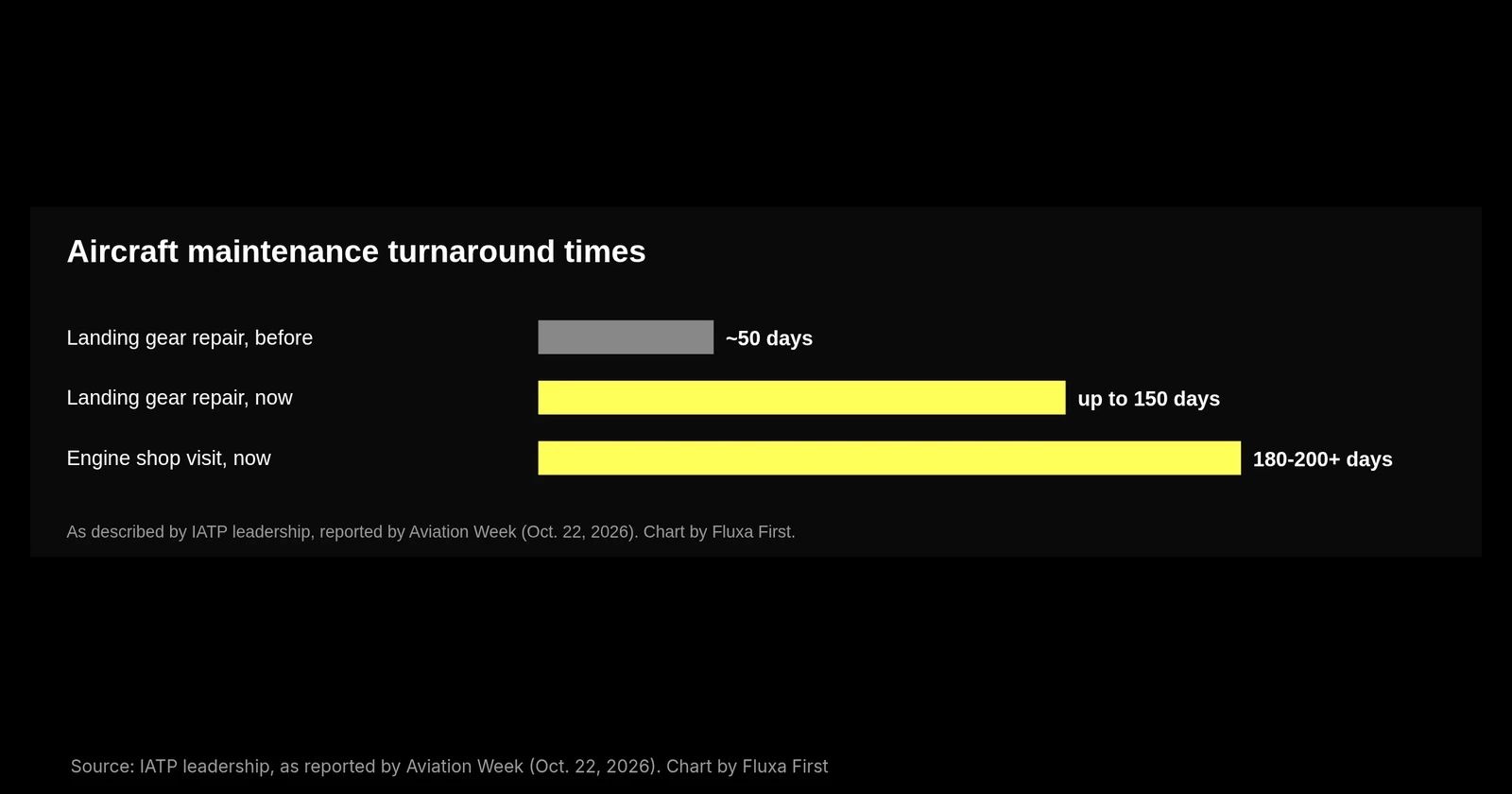
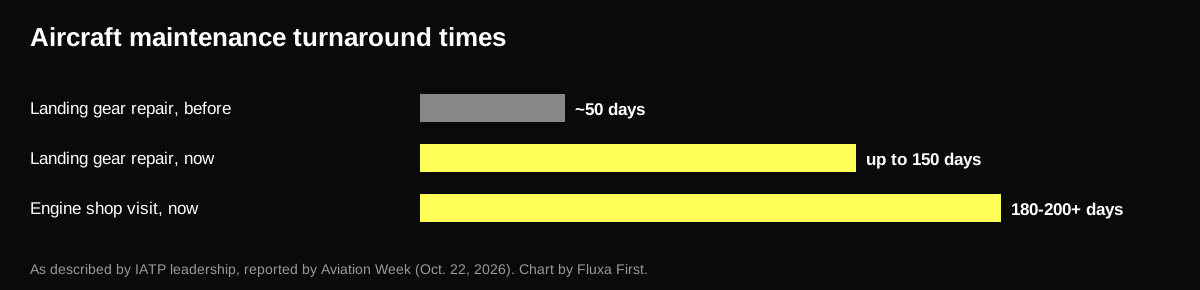
At the International Airlines Technical Pool’s conference in Guangzhou, the group’s chairman described engine shop turnaround times of 180 to 200 days or longer as a reality for many airlines, Aviation Week reported on October 22. He cited an aging fleet, delayed aircraft replacement, the maintenance needs of newer engines, and shortages of material and technicians, and said the pressure is expected to continue next year, with some problems lasting several years.
The pool’s response is telling. It suspended an engine pooling initiative because there were not enough spare engines available to make it work. It is moving ahead with a landing gear pool, expected in 2027, after landing gear repair times reportedly stretched from around 50 days to as much as 150.
The same day, at the Cargo Facts Symposium in Nashville, freighter fleet managers named engine scarcity, cost and maintenance backlogs among their biggest concerns.
What are engine makers saying?
GE Aerospace’s third-quarter results, released October 20, show how much demand is sitting in the aftermarket. Total orders rose 49% to $19.0 billion. In its commercial engines and services business, internal shop visit revenue rose 12%, with LEAP up more than 40%, and spare parts revenue grew more than 20%. GE said its commercial services backlog is above $170 billion.
New engine deliveries are rising too, up 8% in the quarter with LEAP up 5%, and LEAP up 26% year to date. GE said material input from its priority suppliers rose by double digits. And it signed an agreement to acquire Consolidated Precision Products to expand castings capacity for commercial engines, the aftermarket and defense.
That last point matters. When the largest engine maker buys a castings supplier to secure capacity, it tells you where the constraint sits: deep in the supply chain, in metal parts that take years to qualify. We wrote about the same problem in submarines in our post on castings and forgings.
Why is the aftermarket a durable business?
Three features make engine and component maintenance attractive for long-lived companies.
Demand is recurring. Engines need shop visits on schedules set by flight hours and cycles. As long as aircraft fly, the work comes back. That is less cyclical than new aircraft orders.
The shortage is structural. Delayed new aircraft keep older ones flying longer, which means more maintenance. Airline groups also point to the heavy maintenance needs of newer engines. Both add work faster than shops, parts suppliers and technician pipelines have grown.
Buyers will pay for time. An engine sitting in a shop is an aircraft not earning money. Solutions that cut turnaround time have clear, measurable value.
Where can new companies help?
| Bottleneck | Example opportunities |
|---|---|
| Inspection | Automated borescope and non-destructive inspection, AI-assisted defect review |
| Repair | Certified repair processes that save parts instead of replacing them |
| Parts supply | Castings, forgings and machined parts capacity; additive repair |
| Technicians | Training tools, digital work instructions, workforce pipelines |
| Planning | Better forecasting of shop visits and parts demand |
The hurdles are real. Aviation is regulated for good reason, and new repair processes, parts and tools need approval and customer qualification. Founders should plan for long qualification cycles and build quality systems from day one. But once a capability is approved and trusted, it tends to be sticky.
How we see it at Fluxa First
We are drawn to businesses like this: hard to enter, recurring once established and tied to something the economy cannot do without. A company that makes engine shops faster or keeps parts in service longer can grow steadily on revenue rather than on a single big financing event.
That shape of business also fits how we finance companies. Revenue that arrives every quarter, from customers who need the work done, supports studio-aligned capital that grows with the company. It does not require a giant exit to make sense.
The coming years of aviation growth depend as much on the shop floor as on the assembly line. That is where we expect some of the sector’s most durable companies to be built.
Frequently asked questions
Why are jet engine shop visits taking so long?
Airline groups point to an aging fleet, delayed aircraft replacement, the heavy maintenance needs of newer engines, and shortages of materials, parts and technicians.
Is aircraft maintenance a good market for startups?
It can be. Demand is recurring and tied to the size of the flying fleet rather than new orders, and the current shortage makes buyers open to solutions that cut turnaround time. The hurdles are certification, quality systems and long qualification cycles, so founders need patience and capital matched to those timelines.